
-
From game-changing projects to industry-defining moments, we’ve shaped Australia for five decades. Curious how it all began - and what's next?
-
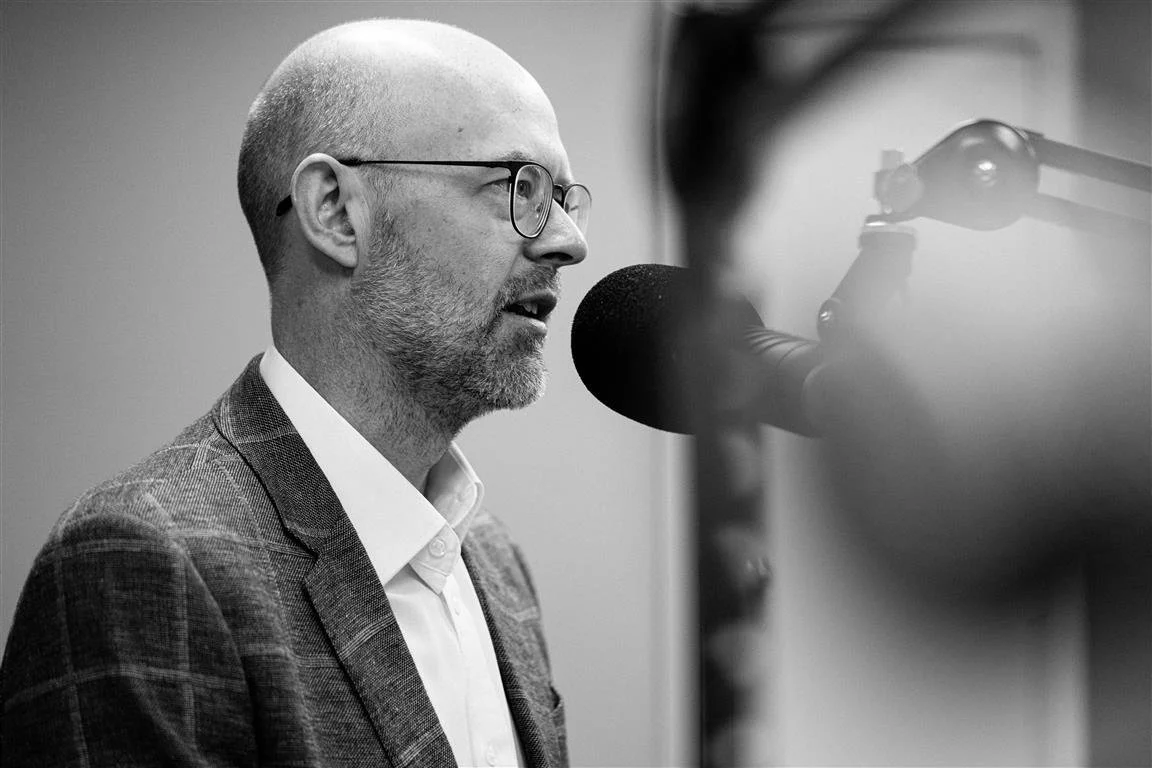
Our Managing Director Gerald joined Coast FM’s Friday Coast Magazine for a lively conversation you won’t want to miss. From project updates to a deep dive into the unique connection between architecture and music venues around the world – including the magic of outdoor concerts – Gerald shared insights that hit all the right notes. He even unpacked the meaning of hemianachoic… curious?

Source: Nick Clayton
-
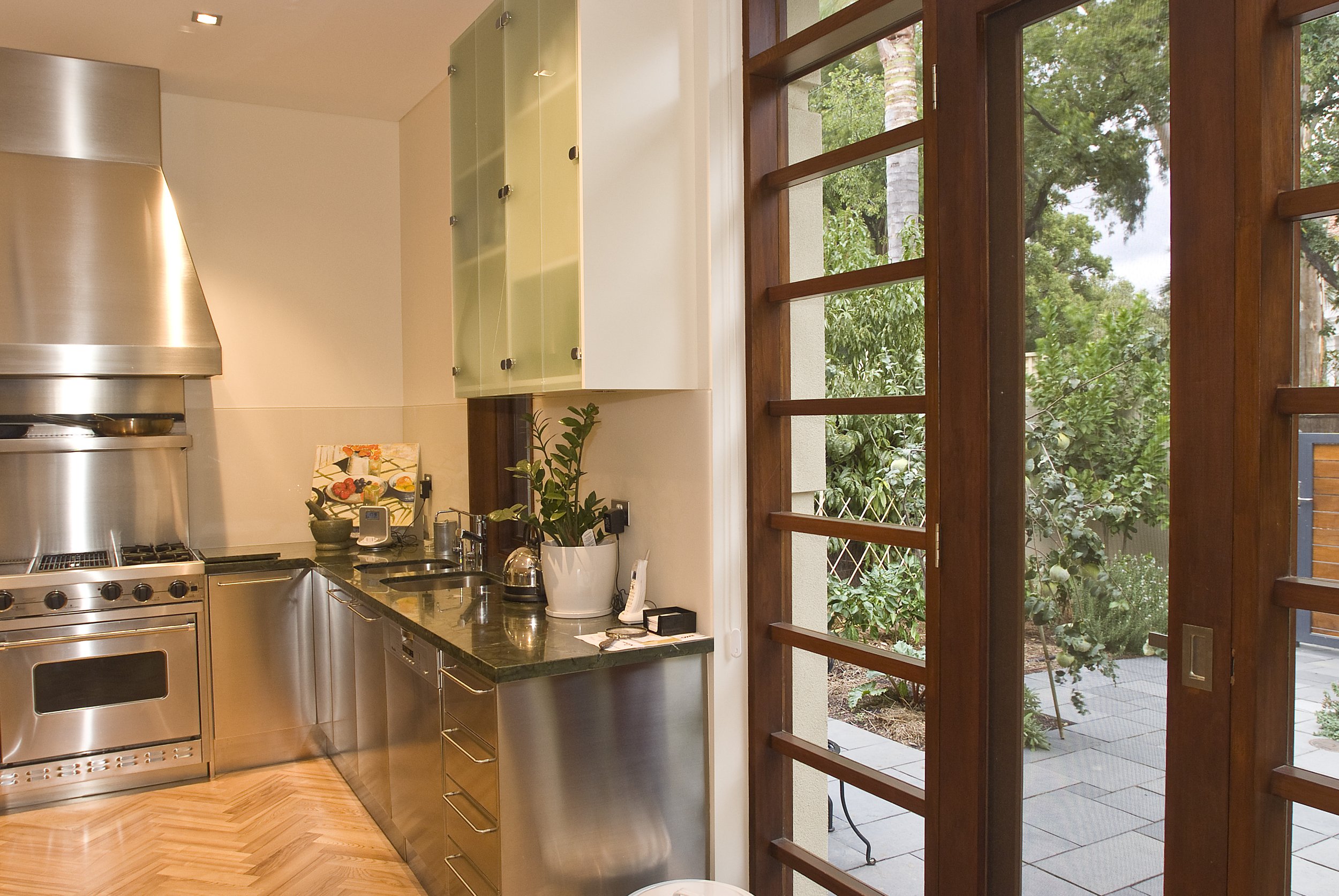
What happens when an architect designs his own home? At Home with Gerald Matthews takes you inside a space that’s equal parts design statement and personal sanctuary

Source: Adobe Stock
-
Adelaide’s music scene has long been part of the city’s cultural fabric. From the thriving pub circuit of the 1970s and 80s to the internationally acclaimed musicians and educators who call our city home today, music is central to how Adelaide defines itself. In 2015, this legacy was recognised when we were named a UNESCO City of Music – an honour that places us among a select group of global cultural hubs.
But as Matthews Architects’ Managing Director, Gerald Matthews, recently reflected, with recognition comes responsibility.
“When you earn a title like this, you have to live up to it. It’s not just a badge – it’s something you keep building.”
While Adelaide has world-class music schools and a dedicated symphony orchestra, challenges remain. The introduction of pokies saw the decline of live music in pubs, and our orchestral musicians still lack a permanent home for rehearsal, performance, and recording. What’s missing, Gerald suggests, is not talent, but the right spaces.
The great music cities of the world thrive because of their infrastructure – venues, rehearsal rooms, and recording spaces that allow artists to meet, collaborate, and take risks. These are the places where new bands form, where albums are recorded, and where audiences discover fresh voices. Adelaide, Gerald argues, has the potential to create such spaces, but it requires thoughtful investment at the right scale.
Rather than one massive, multi-purpose arena, Adelaide could benefit more from a network of smaller, acoustically excellent venues that nurture musicians and audiences alike. Spaces designed for 300–700 people offer the intimacy and clarity that music demands, while creating opportunities for artists to grow and for audiences to connect.
“It’s not about building the biggest,” Gerald explains. “It’s about getting the scale right – creating spaces that inspire music, collaboration, and community.”
As a UNESCO City of Music, Adelaide already has strong foundations: exceptional music education, a rich cultural history, and a dedicated community of musicians. What’s needed now is infrastructure that matches this ambition – spaces that invite participation, foster inclusivity, and attract talent from around the world.
-
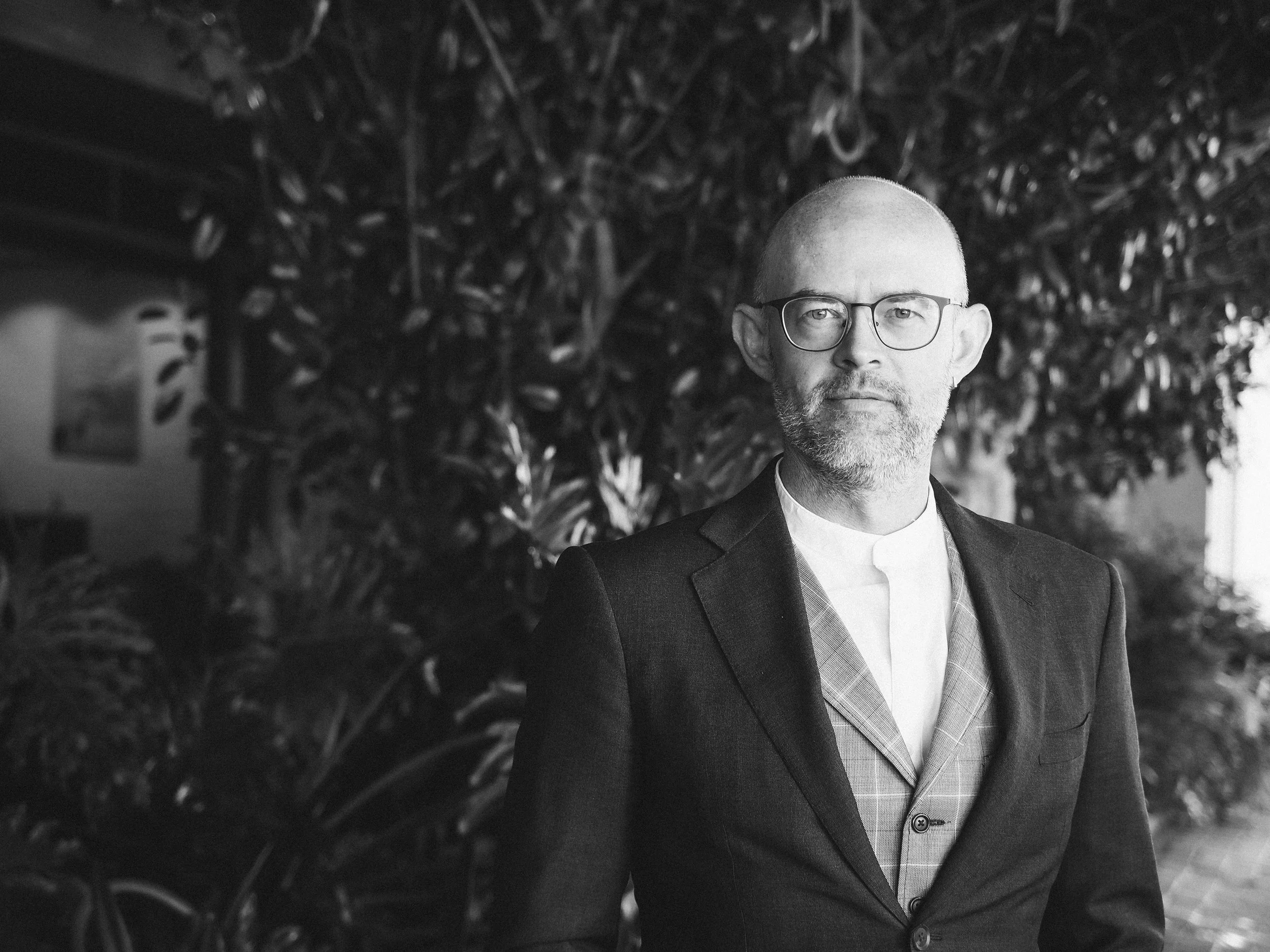
Talking Architecture Episode 240: Gerald Matthews on modern education design, heritage-rage and why doughnut shaped planets can’t exist.
-
Gerald Matthews provides insight on South Australia’s 2024 Future Living code amendment, focusing on co-located living.
Source: Sarah Long for Matthews Architects
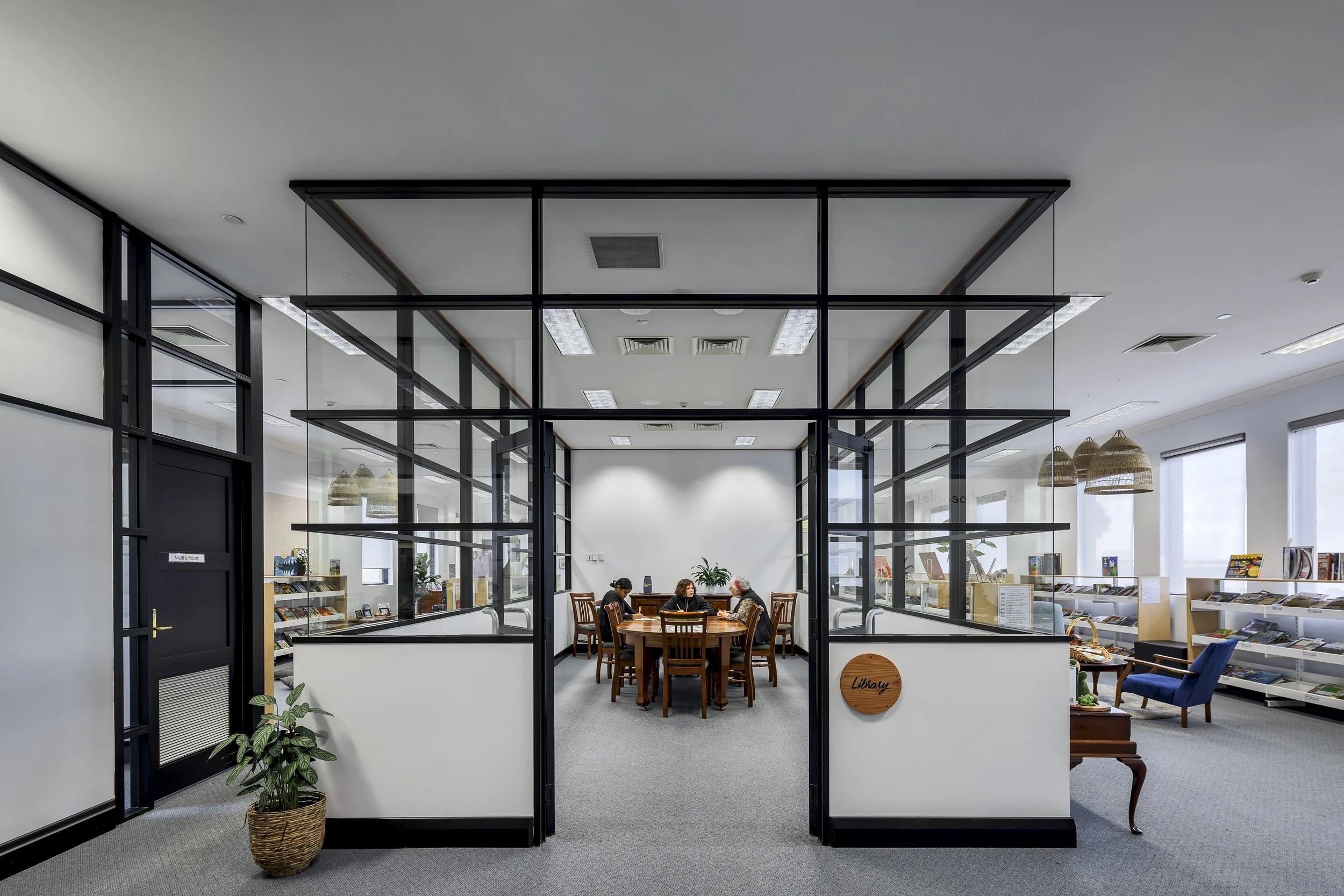
Source: Aaron Citti for Matthews Architects
-
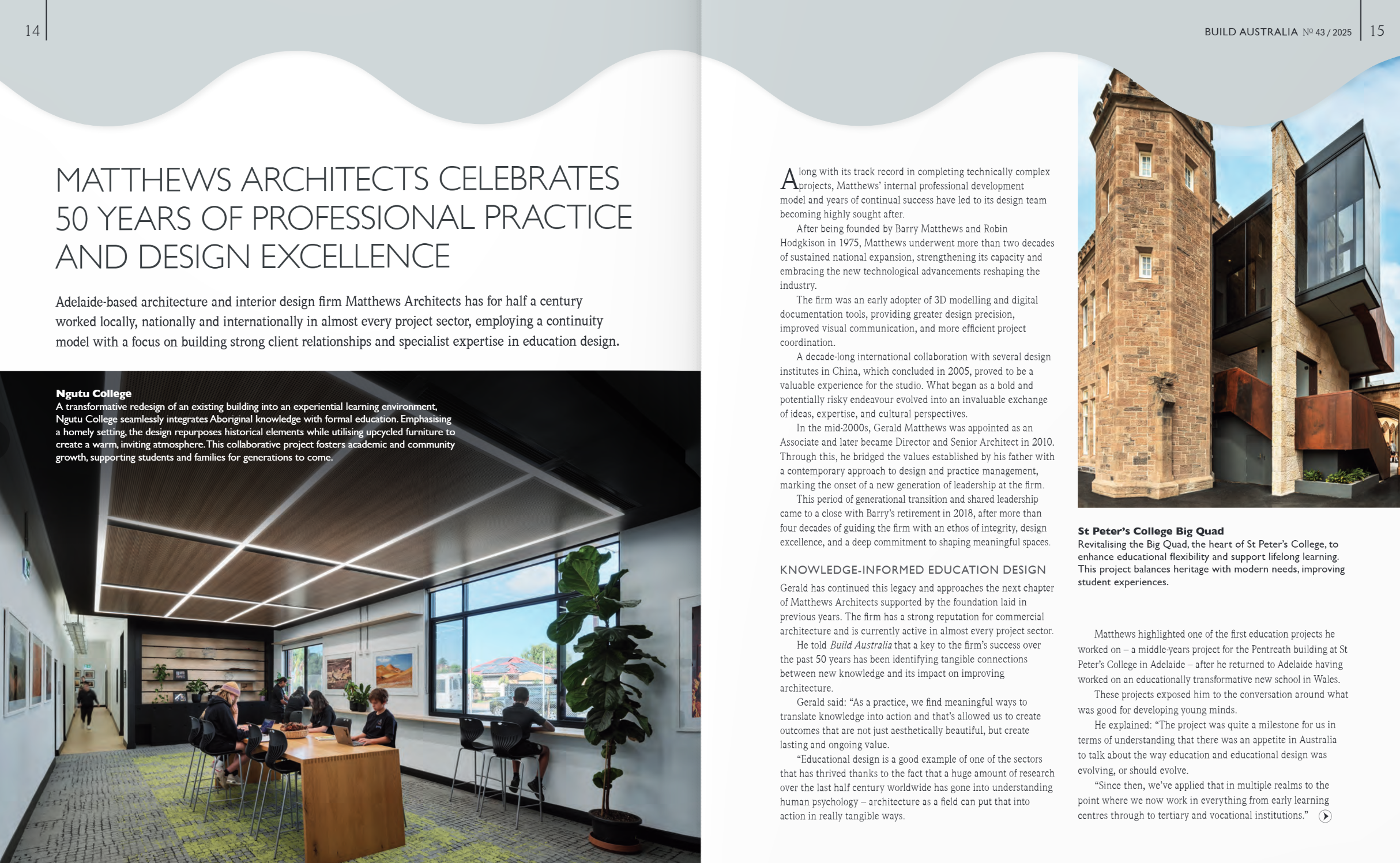
Ngutu College isn’t your typical school—it’s a radical rethink of what education spaces can be. Matthews Architects have transformed a disused CSIRO building into a vibrant campus with no corridors, no classrooms, and no limits on imagination. The result? A place where community, culture, and creativity take centre stage.
-
Q: Gerald, Adelaide was once called the 20‑minute city. Do you think that still holds true?
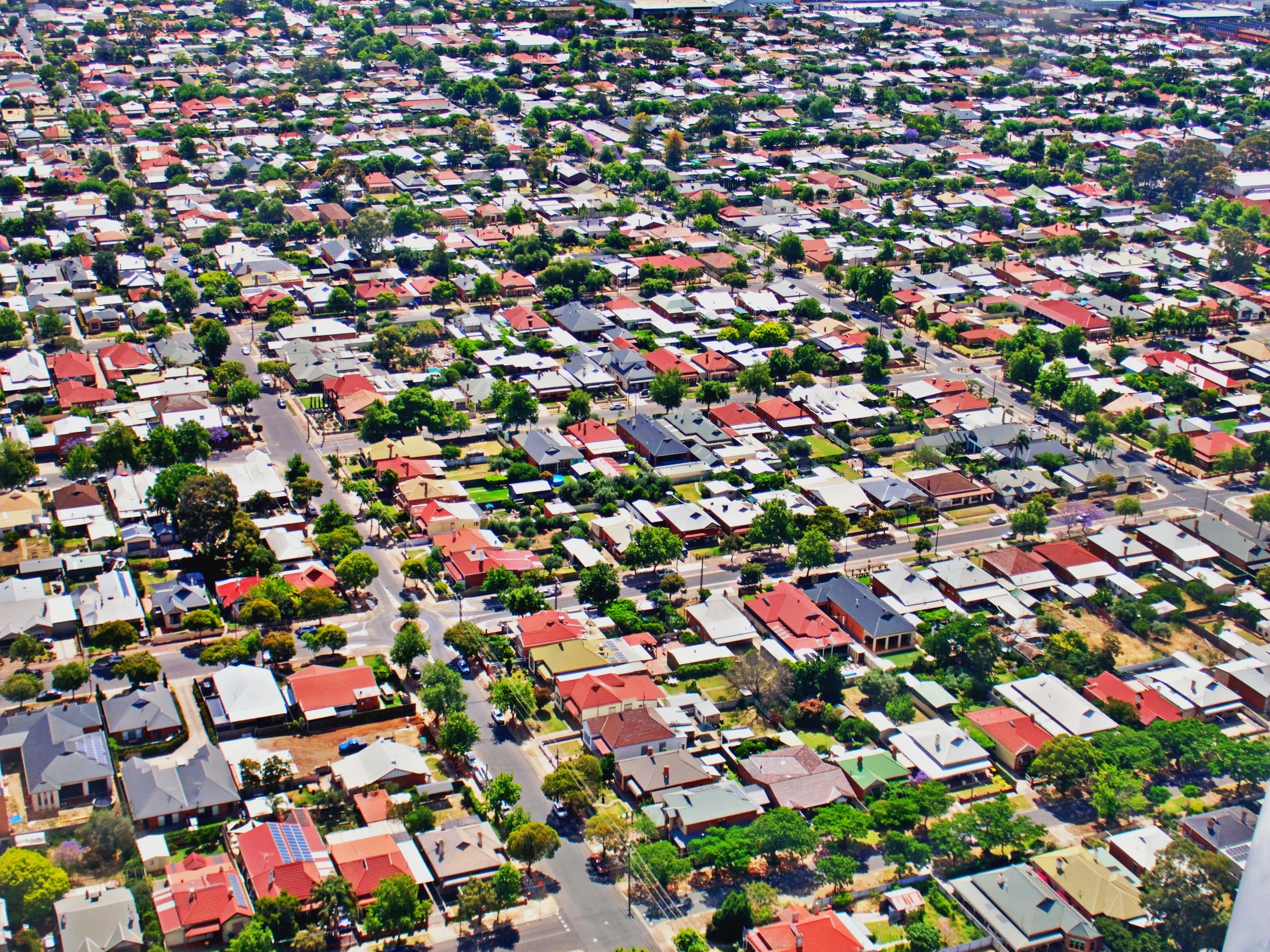
A: Not really. It feels more like a 30‑minute city now, and with continued sprawl we risk becoming a one‑hour city. The more we stretch outwards, the harder it becomes to stay connected.Q: So is growth the problem?
A: Growth itself isn’t bad. In fact, a growing population can energise Adelaide. The real issue is how we grow. If we double the city’s footprint, we lose farmland, community, and liveability.Q: What’s the alternative?
A: Density. Look at cities like Barcelona - about the same population as Adelaide but ten times denser. And it’s considered one of the most liveable cities in the world. Done well, density creates vibrant neighbourhoods, better public spaces, and more walkability.Q: Adelaide once had trams and regional trains. Should they return?
A: Absolutely. We pulled out infrastructure that should never have been removed. Re‑establishing strong public transport links between the city and regional towns would reduce car dependency and revive those communities.Q: And what about suburban life - do people have to give up the dream of a house and backyard?
A: Not necessarily. But we can rethink it. Shared parks, recreation spaces and community facilities work better when neighbourhoods have enough density to support them. Instead of every house duplicating features like outdoor kitchens or family rooms, we can share resources and build stronger communities.Q: So what’s the best model for Adelaide?
A: I think it’s a “Goldilocks” approach - not sprawl at one extreme, not hyper‑density at the other. A balance. We need more transport options, smarter suburban design, and a renewed focus on the heart of the city. That’s how Adelaide can stay “just right”.

Source: Adobe Stock
-
As the realities of climate change become harder to ignore, architects and urban planners are being challenged to rethink the spaces we live, work and gather in. For Matthews Architects Managing Director, Gerald Matthews, the question is no longer if design should respond, but how quickly.
The Building Code of Australia has already pushed the industry to be more transparent with energy performance, requiring information on how much energy a building consumes. Yet, Matthews points out, the real challenge goes beyond compliance: it lies in redefining what we consider “comfortable”.
For centuries, people lived with shifting conditions—hot days, cool nights, seasonal changes. Today, expectations have narrowed to perfectly controlled environments, with air‑conditioning and artificial lighting creating uniform comfort at all times. This control is technically possible, but comes at a huge energy cost. Sometimes, Matthews suggests, comfort can be found more sustainably: simply adjusting how we dress, opening windows for ventilation, or relying on natural light rather than fluorescent glare.
Natural light and fresh air are, after all, healthier for both body and mind. While tall buildings in cities like Adelaide bring practical challenges—such as high winds above the seventh floor—the benefits of designing for natural conditions far outweigh the drawbacks. Reducing reliance on mechanical systems is one of the simplest levers architects can pull to cut emissions.
Looking ahead 50 years, Matthews believes our cities must look different. Much of Australia’s urban form borrows from Europe—a place with an entirely different climate. Adelaide’s famously wide streets, once useful for turning bullock carts, now amplify heat in summer. In hotter countries such as Spain, narrow streets use buildings to shade one another. Learning from these models, Matthews argues, would give our cities greater resilience as extreme heat becomes more frequent.
Resilience against severe weather will be just as important. Storms once thought rare—“one in 100 year events”—now appear with unsettling regularity. Materials, roofs and public infrastructure should be designed not for the average day, but for the worst conditions we are likely to face.
The immediate task, Matthews stresses, is to start now. Buildings are made to last decades, so every design decision today should anticipate the conditions of the future, not the traditions of the past. Rethinking materials, reshaping urban layouts, and letting go of outdated models of comfort are all steps towards creating spaces that will help communities both survive and thrive in a changing climate.
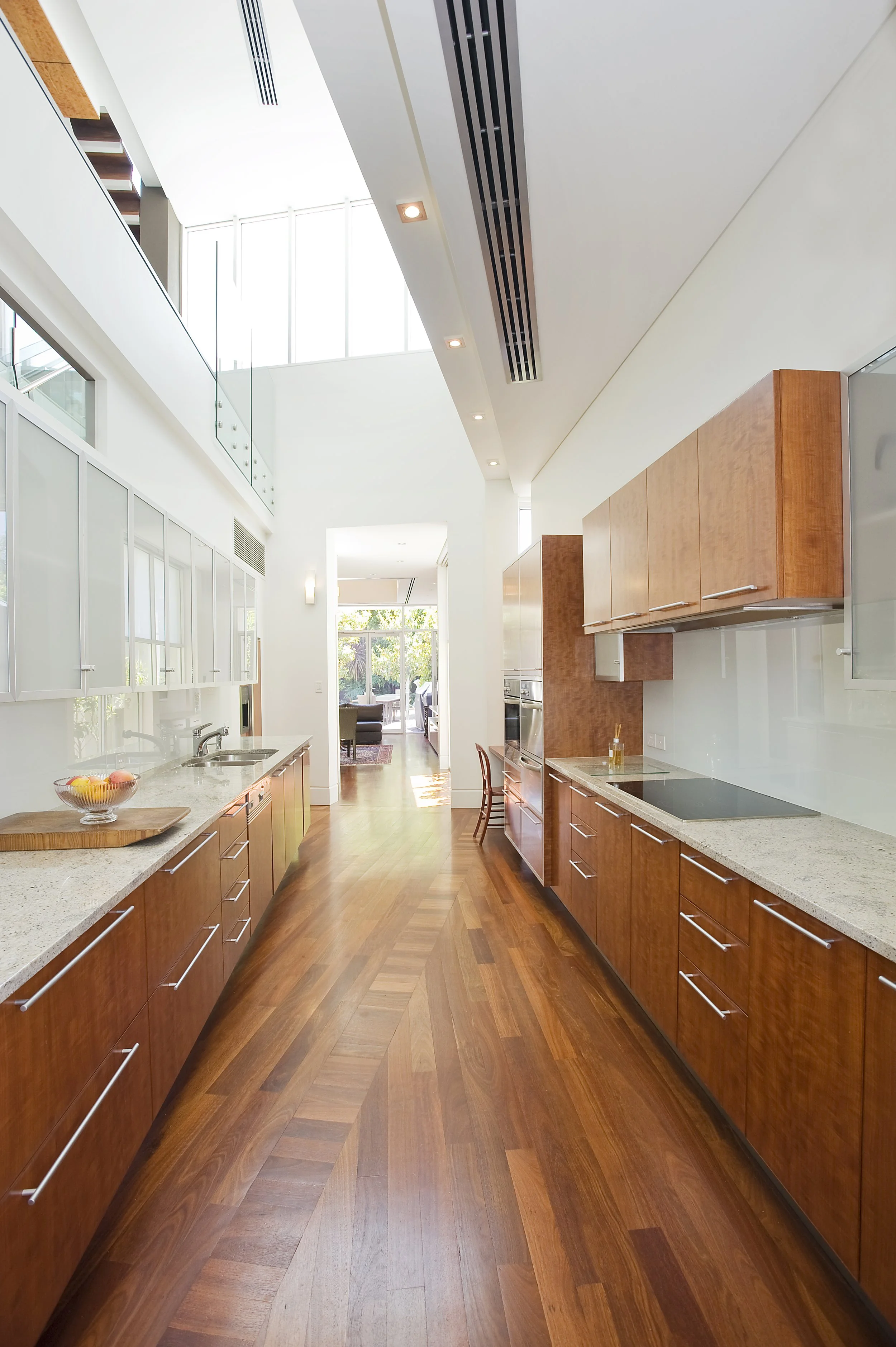
Source: Sarah Long for Matthews Architects
-
Discover how lighting orientation and layering can make daily tasks easier and how smart design saves energy without compromising style.
Light isn’t just about seeing—it’s about feeling at home.

Source: Aaron Citti for Matthews Architects
-
From debunking the myth of AI as true intelligence to advocating for a return to deep technical mastery in architectural education
Dive into the mind of a modern architect forging a path between tradition and technology.
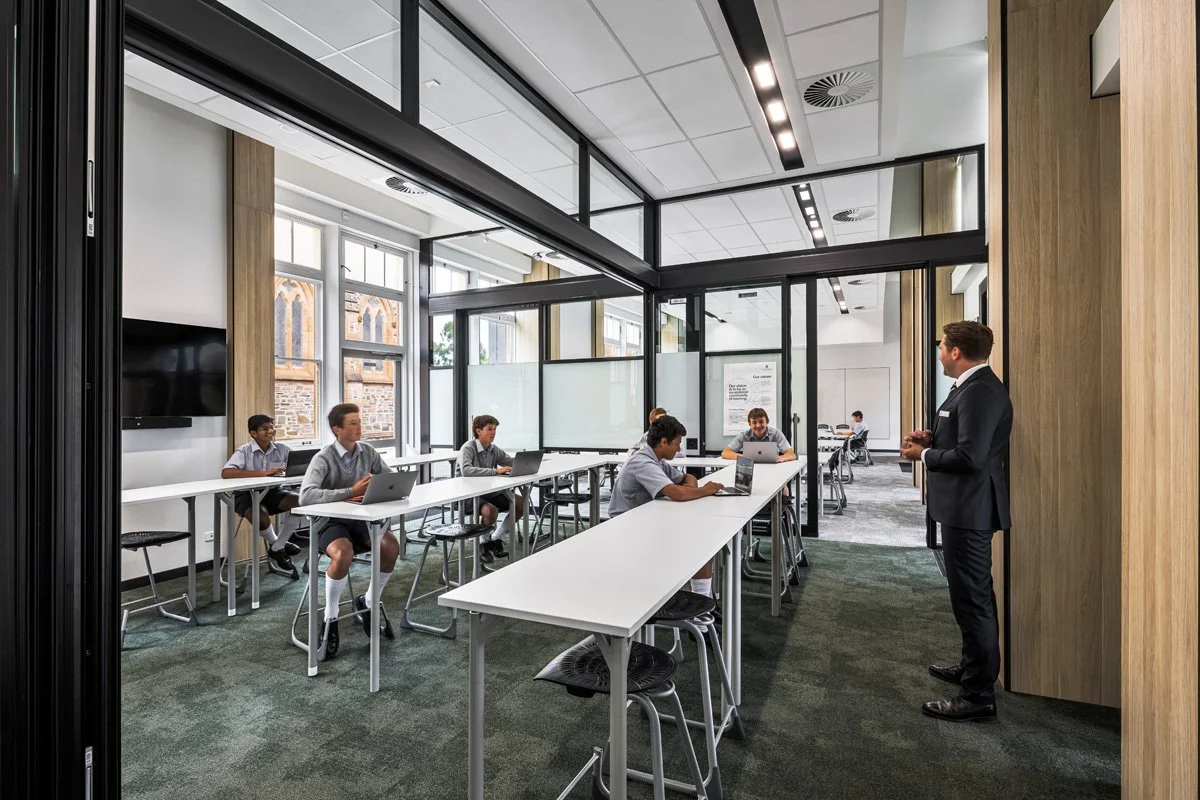
Source: Aaron Citti for Matthews Architects
-
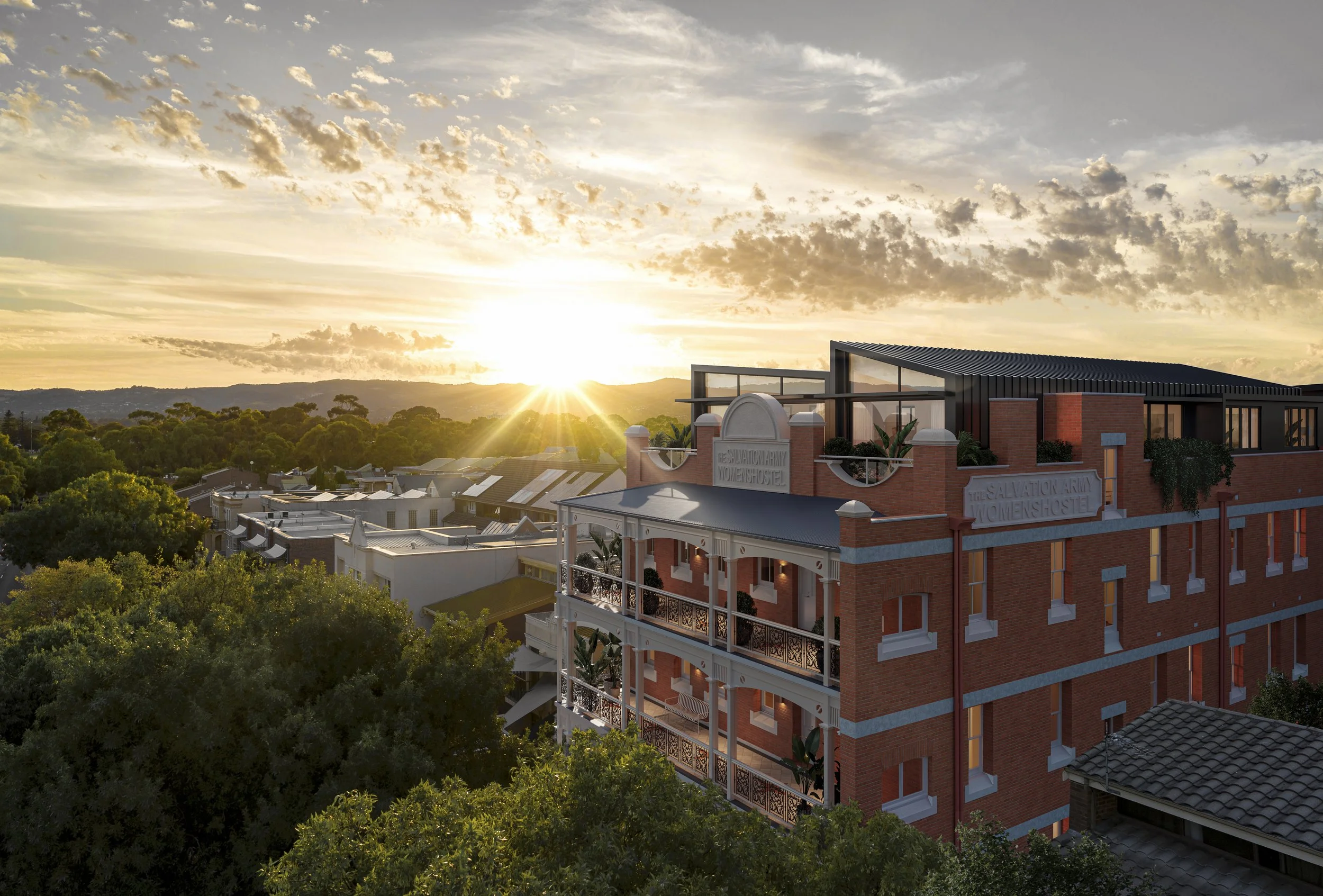
St Peter’s College, Adelaide, elegantly bridges its 19th-century heritage with forward-thinking spaces that respond to the complex needs of today’s Year 12 students. More than just an upgrade, it’s a lesson in how architecture can nurture resilience, creativity, and a sense of place in the world.
Source: Matthews Architects
-
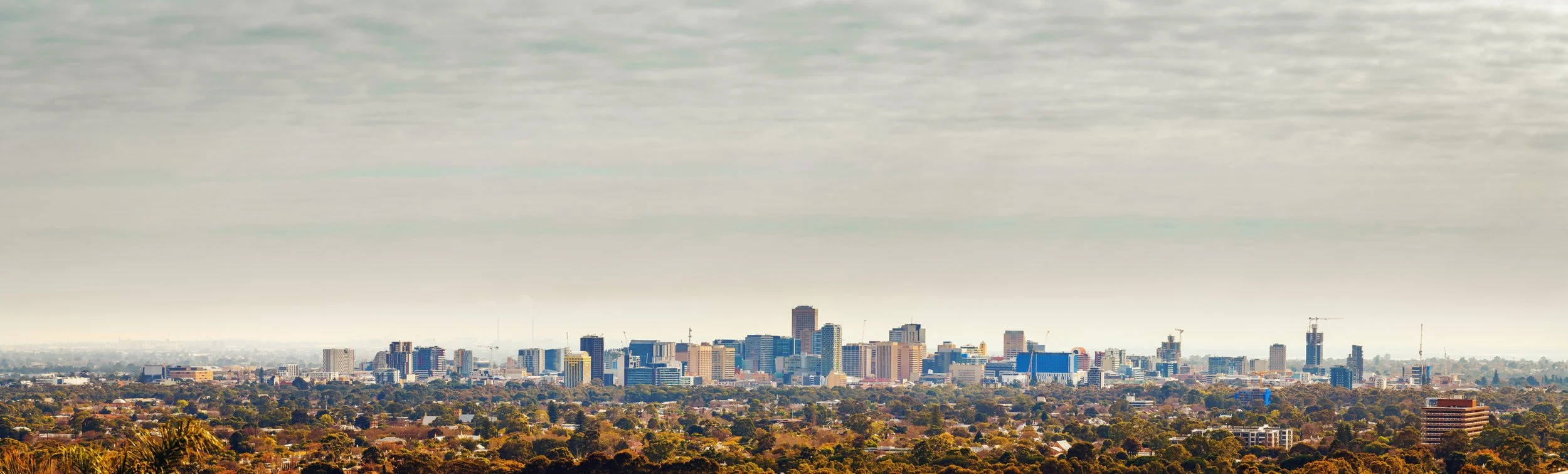
Adelaide’s distinctive city grid and deep-rooted heritage have defined it, but the time has come to envision what’s next.
Is Adelaide ready to evolve and thrive in a changing world?
Source: Adobe Stock
-
Adelaide is one of the few cities in the world designed to be completely embraced by parklands – a gift of vision from Colonel Light that has shaped our identity for nearly two centuries. Yet, as Senior Architect and Managing Director Gerald Matthews reflected during his recent conversation with Deb Tribe on ABC Radio, the question remains: how do we make these spaces not only preserved, but truly alive?
For Gerald, the answer begins with greenery, not concrete.
“Central Park in New York and the Tiergarten in Berlin didn’t become world-renowned destinations overnight,” he explained. “They took decades – generations – of investment, care, and imagination. At their heart, they are gardens. Adelaide’s parklands have the potential to be the same, but right now, much of it is treated like a neglected backyard.”
The conversation with Adelaide listeners revealed a common theme: people don’t want more buildings in the parklands, they want better use of the green spaces themselves. Understory planting, shaded walks, citrus groves, lakes that attract life and activity, and spaces where community can gather for music, play, or quiet reflection.
What makes this vision powerful is its balance. The parklands are not a blank canvas for development, but neither should they be frozen in time as a museum piece. As Gerald put it:
“The best way to protect the parklands isn’t to stop new ideas – it’s to invest in them as living gardens. If we don’t use them, we risk losing them.”
Practical challenges remain. Maintenance costs, infrastructure, and long-term governance were raised by callers. But here too lies an opportunity. Cities like Lyon and New York demonstrate that communities are willing to invest in public green spaces when they are seen as civic treasures, not as expendable land.
What emerged from the ABC discussion was a collective aspiration: to elevate the parklands into something that truly reflects Adelaide’s uniqueness – a city within a garden. A place that welcomes visitors but, more importantly, offers everyday joy, health, and inspiration for the people who live here.
At Matthews Architects, we believe this is the essence of design at its best: shaping environments that respect heritage while imagining their future potential. Adelaide’s parklands are already a jewel. With vision and commitment, they can shine even brighter for generations to come.